

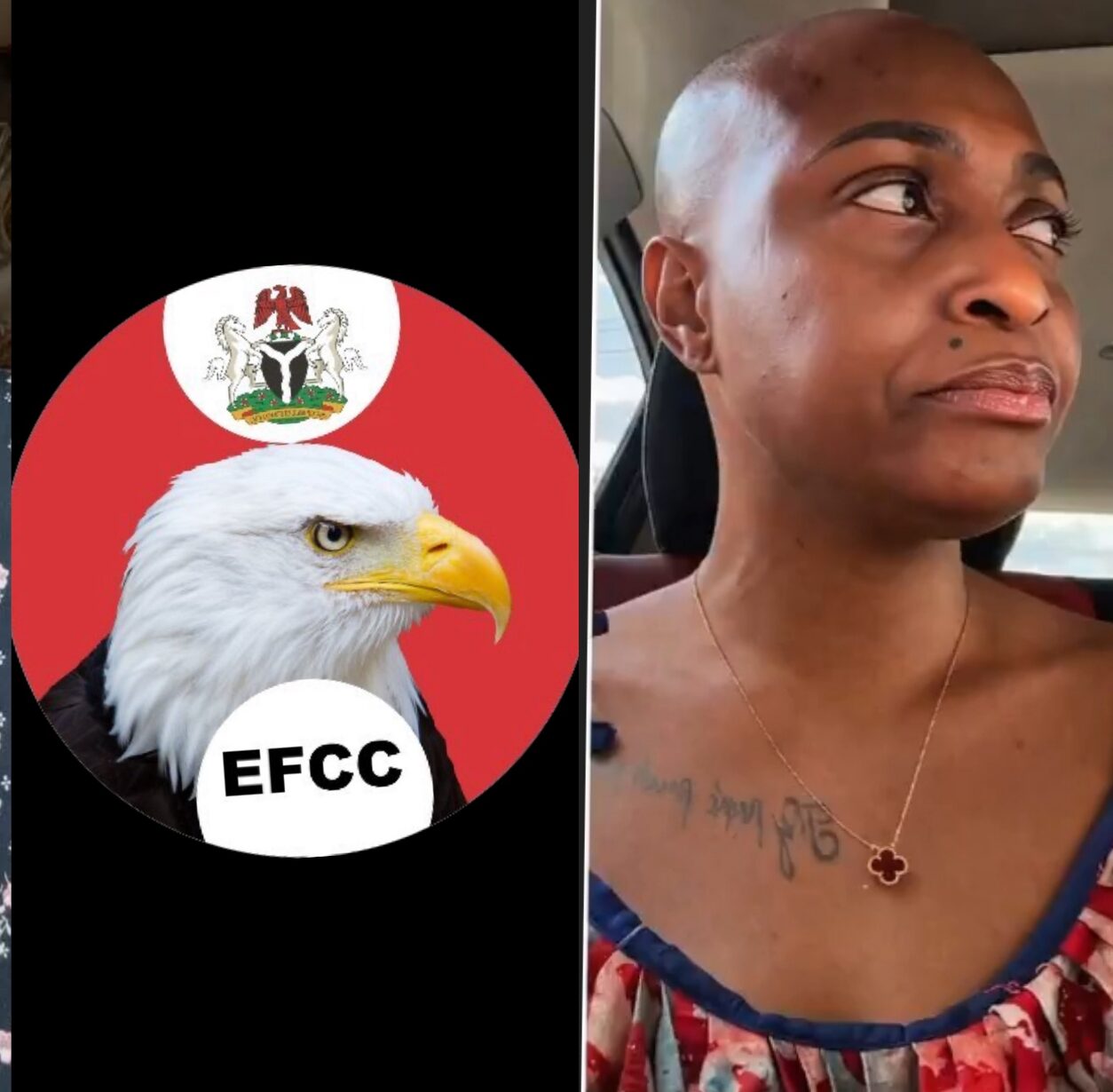
The Economic and Financial Crimes Commission has shed light on why no action has been taken against Blessing Okoro, popularly called Blessing CEO, despite the uproar over her cancer claims and public fundraising.
The controversy erupted after she announced she was battling breast cancer and appealed to Nigerians for financial help to undergo surgery. Her appeal quickly triggered mixed reactions, with many questioning the authenticity of her diagnosis and accusing her of possibly misleading the public.
Amid the backlash, Blessing later clarified during interviews that she had not been diagnosed with stage 4 cancer, attributing the earlier reports to misinterpretation. She explained that she was still undergoing tests and had not started chemotherapy, while also disputing viral claims that she received N100 million, insisting the donations totalled N13 million.
While public pressure mounted for her arrest, a source within the commission revealed that no formal complaint has been filed, which is a key requirement before any investigation can begin. The official emphasised that the agency cannot act based on social media outrage alone without a legitimate petition.
“Everybody is saying EFCC should arrest Blessing CEO. But nobody has placed a petition before the EFCC CEO. As an anti-corruption agency, we cannot work on social media agitation, social media frenzy, without a credible petition that will authorise us to work on it.”
The source also pointed out that any case taken to court would require a petitioner who can serve as a witness.
“If we go by social media agitation and there is a need to go to court, who is going to serve as a witness? Who are we going to say has petitioned the commission?”
The commission further called on anyone with verifiable evidence, including proof of donations, to step forward and submit a formal petition if they believe wrongdoing occurred.
“Everybody knows that if somebody obtains anything by false pretence, they are liable to EFCC investigation if it can be established. This is the receipt of the money she collected. They should come forward with receipts and evidence.”