

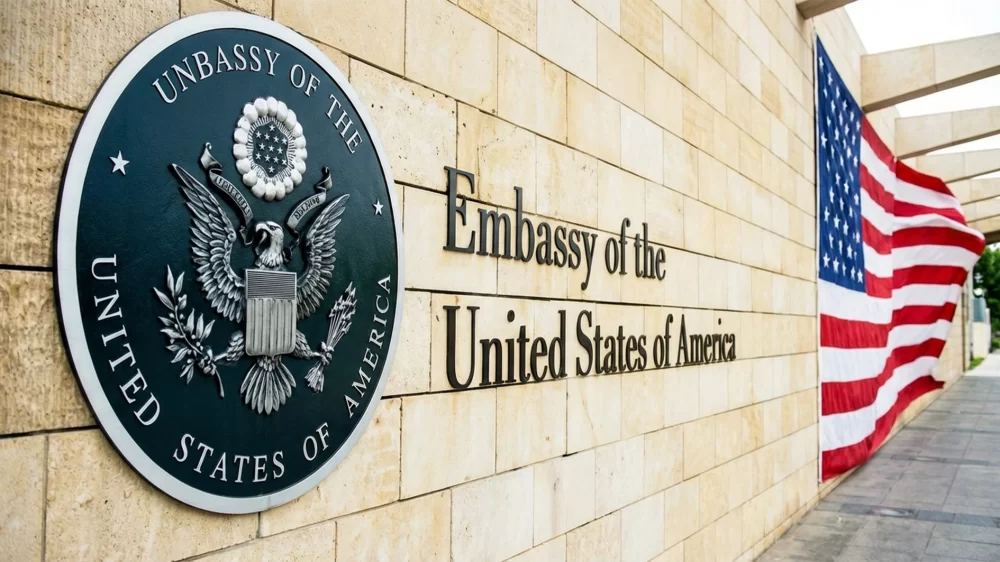
The United States Department of State has approved the withdrawal of non-essential staff and their families from its embassy in Abuja, pointing to growing security concerns across Nigeria.
In a revised travel advisory released on Wednesday, the agency said the move took effect from April 8, 2026, urging American citizens to reconsider trips to the country due to increasing risks such as crime, terrorism, kidnapping, civil unrest, and uneven healthcare services.
Nigeria remains under a “Level 3: Reconsider Travel” notice, while 23 states are now classified under the highest alert, “Level 4: Do Not Travel.” Plateau, Jigawa, Kwara, Niger, and Taraba were recently added to this top warning category.
The advisory noted that several northern states—including Borno, Yobe, Niger, Kogi, Kwara, Plateau, Taraba, and parts of Adamawa—face heightened threats from terrorism, armed groups, and abductions. In the South and Southeast, states such as Abia, Anambra, Bayelsa, Delta, Enugu, Imo, and Rivers (excluding Port Harcourt) were also flagged due to violent crime and unrest.
Officials warned that the situation in these regions remains volatile, with frequent cases of banditry, communal violence, and sudden security operations. Violent crimes like armed robbery, carjacking, and kidnapping for ransom were described as widespread, with foreigners often seen as prime targets.
The department also cautioned that terrorist attacks could occur without warning in public spaces, including markets, malls, hotels, places of worship, and large gatherings.
Concerns were equally raised about Nigeria’s healthcare system, which was described as inconsistent and below the standards found in the United States or Europe.
Americans who must travel were advised to enroll in the Smart Traveler Enrollment Program (STEP), avoid crowded areas and protests, and put personal safety measures in place, including emergency identification protocols.