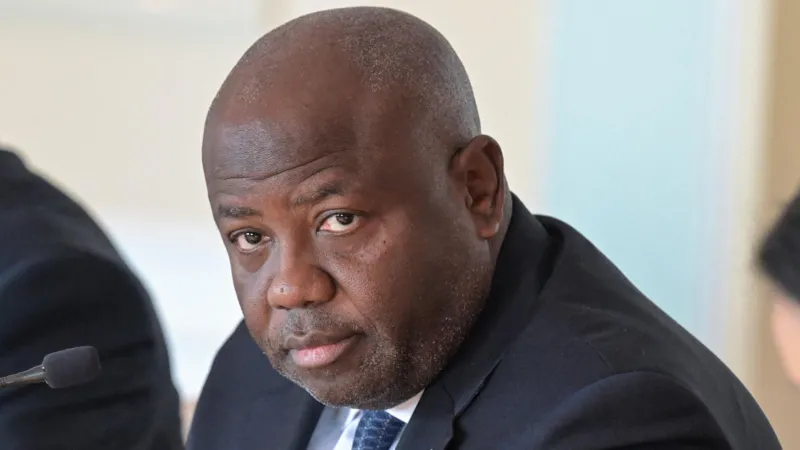
Equatorial Guinea’s entire government has resigned after failing to achieve key national objectives, according to Vice-President Teodoro Nguema Obiang Mangue.
The vice-president, who is the son of President Teodoro Obiang Nguema Mbasogo, announced that Prime Minister Manuel Osa Nsue Nsua had submitted the resignation of the entire cabinet after the administration reportedly achieved less than 10 per cent of its set goals.
Although the specific targets were not disclosed, the ruling party said President Obiang was dissatisfied with the government’s performance, accusing it of encouraging corruption and failing to diversify the country’s economy.
The president, who has been in power since 1979 and is regarded as the world’s longest-serving leader, had appointed the outgoing administration in 2024 with Manuel Osa Nsue Nsua as prime minister.
Explaining the decision on Tuesday, Vice-President Obiang said the resignations reflected the principle that public officials must be judged by the results they deliver.
“The degree of execution achieved is clearly insufficient in relation to the expectations and commitments undertaken,” he wrote on X.
In a statement shared by the ruling Democratic Party of Equatorial Guinea (PDGE), the president expressed disappointment with the government’s management, citing corruption, misuse of state resources for personal gain and delays in executing major development projects. He is expected to announce a new cabinet in the coming days.
The statement also noted that the administration had failed to implement policies aimed at diversifying the economy, particularly in agriculture, a sector seen as crucial to reducing the country’s dependence on imported goods.
Despite being one of Africa’s oil-rich nations, Equatorial Guinea remains heavily dependent on petroleum exports, with oil and gas accounting for the bulk of government revenue. Much of the country’s population of about 1.8 million people has yet to benefit from its natural wealth, as poverty persists and the economy continues to struggle amid declining oil production and weakening global demand.