

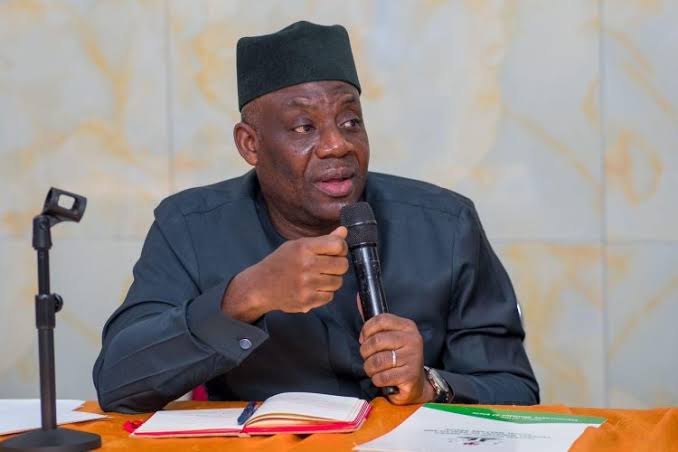
The Federal Government has unveiled a fresh plan to scrap the Junior Secondary School Common Entrance Examination and replace it with a Learner Identification Number system to track students throughout their education.
Minister of Education, Tunji Alausa, disclosed this during an interactive session with journalists in Lagos, noting that the proposed reforms are aimed at expanding access to education and improving how students are monitored nationwide.
Under the new policy, the common entrance examination will be gradually discontinued and substituted with a Continuous Assessment model. This system will evaluate pupils based on their academic performance from the early stages of primary school.
“It will be replaced by Continuous Assessment, CA. The CA will reflect the performance of the pupil from primary one and even if a pupil is transferring from one school to another, he will take it along to his new school.”
Alausa explained that the reform is part of broader efforts to address the gap between primary and secondary school enrolment, particularly the large number of pupils who fail to transition.
He revealed that despite having over 50,000 public primary schools with more than 23 million pupils across Nigeria, only slightly above 3 million proceed to junior secondary school in public institutions.
“We have over 50,000 public primary schools in the country with over 23 million pupils. However, from statistics available to us, only a little over 3 million among those pupils move to the junior secondary school level in our public schools, then the question is, where are the about 20 million not enrolled in our public secondary schools?”
According to him, the figures highlight a serious access challenge, stressing that private schools cannot absorb the millions of pupils left out of the system. He added that discussions have already been held with the Nigerian Governors’ Forum, urging state governments to invest in building more schools.
“It is obvious that we cannot say our private schools accommodate all of them. The issue is simply lack of access and we are working on that. There is need to build more schools and I have met the Nigerian Governors’ Forum over that. State governments need to build more schools to accommodate more pupils and students.”
To strengthen monitoring, the minister said each child will be assigned a unique Learner Identification Number from primary school, which will remain with them even if they change schools.
“To also follow up on our pupils and students, we are introducing the Learner Identification Number right from primary school level for our children. It will be unique to each child and they will have the number no matter where they started schooling or later transferred to.”
He added that the system will make it easier to track students’ academic progress and quickly identify those who drop out.
“If somebody is expected to be in JSS class one and he is not there, we will be able to know the reason why he is not continuing his education.”