

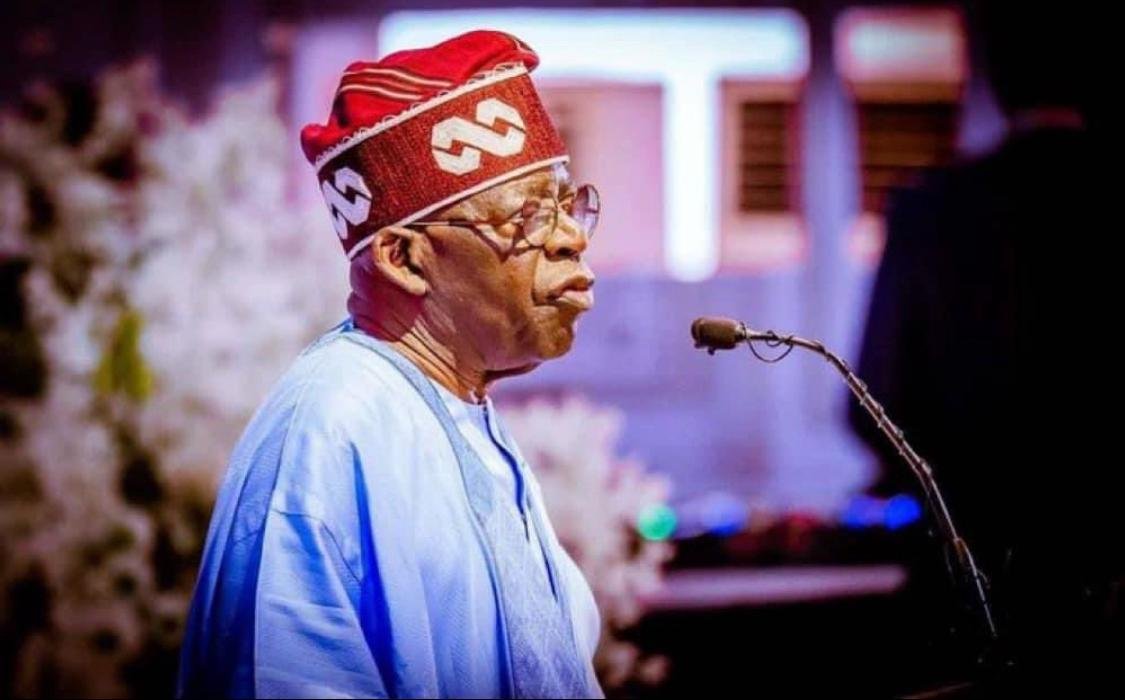
President Bola Tinubu has renewed Nigeria’s call for comprehensive reforms of the United Nations, particularly the restructuring of the Security Council to give Africa permanent representation.
Tinubu made the demand in his address to the 81st Session of the United Nations General Assembly in New York, delivered on his behalf by Vice President Kashim Shettima on Thursday. Nigeria’s position is consistent with the African Union’s longstanding push for greater representation on the Security Council.
The President argued that the existing structure of the Security Council reflects the global power distribution of the post-World War II era and does not adequately represent present-day realities.
“The reform of this institution must begin with the reconstitution of the Security Council, for the world of 2026 cannot remain captive to the distribution of power in 1945.
“Africa cannot continue to fill the Council’s agenda while remaining absent from its permanent membership,” he said.
Tinubu called for at least two permanent seats for Africa, in line with the Ezulwini Consensus and the Sirte Declaration. He also demanded that the proposed permanent members should have the same rights and responsibilities as existing permanent members, including veto powers for as long as the veto remains part of the Council’s structure.
“Nigeria demands, in accordance with the Ezulwini Consensus and the Sirte Declaration, at least two permanent seats for Africa, with all the rights and responsibilities of permanent membership, including the veto for as long as it exists, and five non-permanent seats in total. The authority to speak for humanity carries an obligation to represent it,” he added.
The African Union’s reform position similarly calls for no fewer than two permanent seats and five non-permanent seats for Africa in an expanded Security Council.
Tinubu also called on world leaders to address ongoing conflicts and resist rising nationalism, warning that continued instability threatens the international order.
“The persistence of conflict across the world recalls the purpose for which the United Nations was founded: to spare succeeding generations the devastation of war. We must therefore return to the founding principles of dialogue, mutual respect and collective responsibility.
“Nigeria stands by the Charter and its promise of a world in which diplomacy prevails over coercion, cooperation over isolation and international law over the arbitrary exercise of power,” he stated.
The President stressed that conflicts in one part of the world can have consequences beyond national borders, making international cooperation essential to addressing global security challenges.
He highlighted Nigeria’s contributions to peacekeeping and conflict-resolution efforts across Africa, including missions in Liberia, Sierra Leone, Darfur, Mali and The Gambia.
“Through ECOWAS, the African Union and our Gulf of Guinea partnerships, we continue to advance mediation, democratic governance, counter-terrorism and maritime security,” he said.
Tinubu further said Nigeria remained committed to sustainable development through sound macroeconomic management, stronger institutions, private-sector growth and strategic public investment.
He maintained that Nigeria’s development is closely connected to Africa’s progress and broader international efforts to promote peace, equity and prosperity.
The President also said governments must earn public confidence by implementing policies that improve citizens’ lives, while urging leaders to address security and climate-related challenges rather than assume that national borders can shield countries from global crises.