

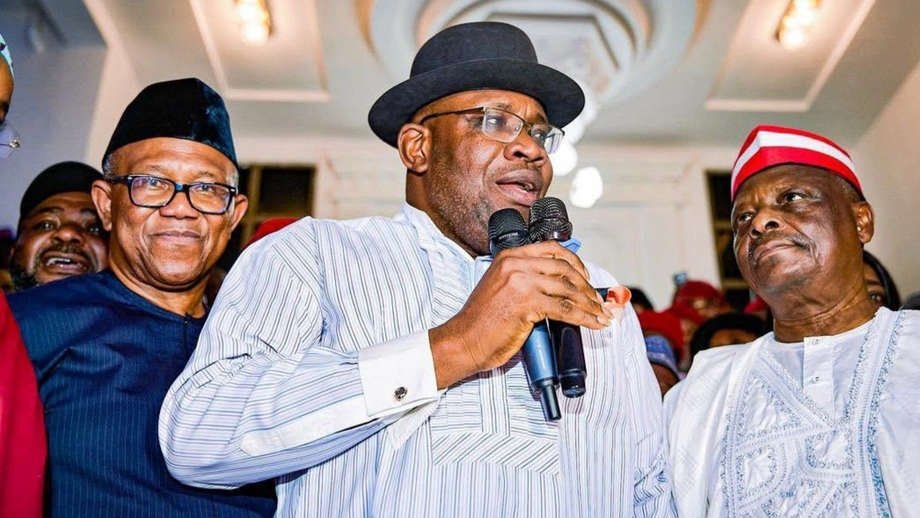
National leader of the Nigeria Democratic Congress (NDC), Senator Seriake Dickson, has maintained that the party remains eligible to participate in the 2027 general elections despite a recent Federal High Court judgment in Lokoja that has sparked debate over its legal status.
Speaking during an interview on Channels Television, Dickson rejected claims that the ruling invalidated the party’s registration, insisting that the NDC is still a recognised political party under the law.
He stressed that the court did not direct the Independent National Electoral Commission (INEC) to deregister the party and noted that the electoral body has not taken any action against it.
“NDC is on the ballot. All our candidates will be on the ballot. NDC has not been deregistered and won’t be deregistered,” Dickson said.
The former Bayelsa State governor argued that the court exceeded its authority by revisiting an earlier judgment, describing the decision as legally flawed. He revealed that the party had already filed for a stay of execution and an injunction to prevent INEC from taking any action while its appeal is being heard.
Dickson also challenged the credibility of the group that filed the lawsuit, claiming it was an unregistered association without the legal capacity to contest the NDC’s registration.
According to him, the party has successfully conducted its primary elections for all elective offices, including the presidency, governorships, National Assembly, and state assemblies, with INEC officials monitoring the process in line with the commission’s timetable.
He added that the court ruling had unexpectedly boosted public interest in the party, saying thousands of Nigerians had since visited the NDC’s website to register as members.
On the issue of state policing, Dickson backed the idea of decentralising Nigeria’s police structure but recommended that the process should begin with zonal policing before transitioning to full state police.
He also proposed that governors should have the authority to appoint state commissioners of police, subject to approval and oversight by their respective state legislatures.
However, he warned against introducing such a major reform too close to a general election, arguing that the timing could raise questions about fairness and impartiality.