

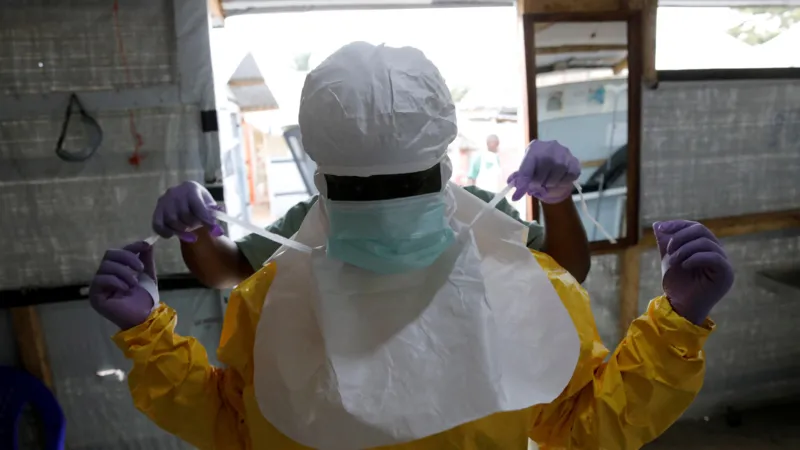
The World Health Organization has declared the Ebola outbreak affecting the Democratic Republic of the Congo and Uganda a public health emergency of international concern after over 300 suspected infections and 88 deaths were recorded.
WHO Director-General, Tedros Adhanom Ghebreyesus, announced the decision as health officials continue efforts to contain the spread of the deadly virus across the region.
Despite the alarming situation, the WHO stressed that the outbreak has not reached the level of a pandemic like COVID-19 and urged countries not to close their borders.
The health body confirmed that a laboratory-tested Ebola case was discovered in Kinshasa, the Congolese capital located roughly 1,000 kilometres from the main outbreak zone in Ituri province, sparking concerns that the disease may be spreading beyond the epicentre.
Authorities also reported suspected infections in North Kivu province, a densely populated area bordering Ituri. The infected patient in Kinshasa was said to have travelled through affected regions before testing positive.
Ebola spreads through direct contact with bodily fluids such as blood, semen and vomit. Though rare, the disease is highly dangerous and can be fatal.
Health officials revealed that the latest outbreak is linked to the Bundibugyo strain of Ebola, an uncommon variant with no approved vaccine or specific treatment currently available.
While the Democratic Republic of the Congo and Uganda have experienced more than 20 Ebola outbreaks over the years, this is only the third recorded outbreak involving the Bundibugyo strain.
According to the WHO, nearly all the reported infections were recorded in the Democratic Republic of the Congo, while Uganda confirmed two cases.