

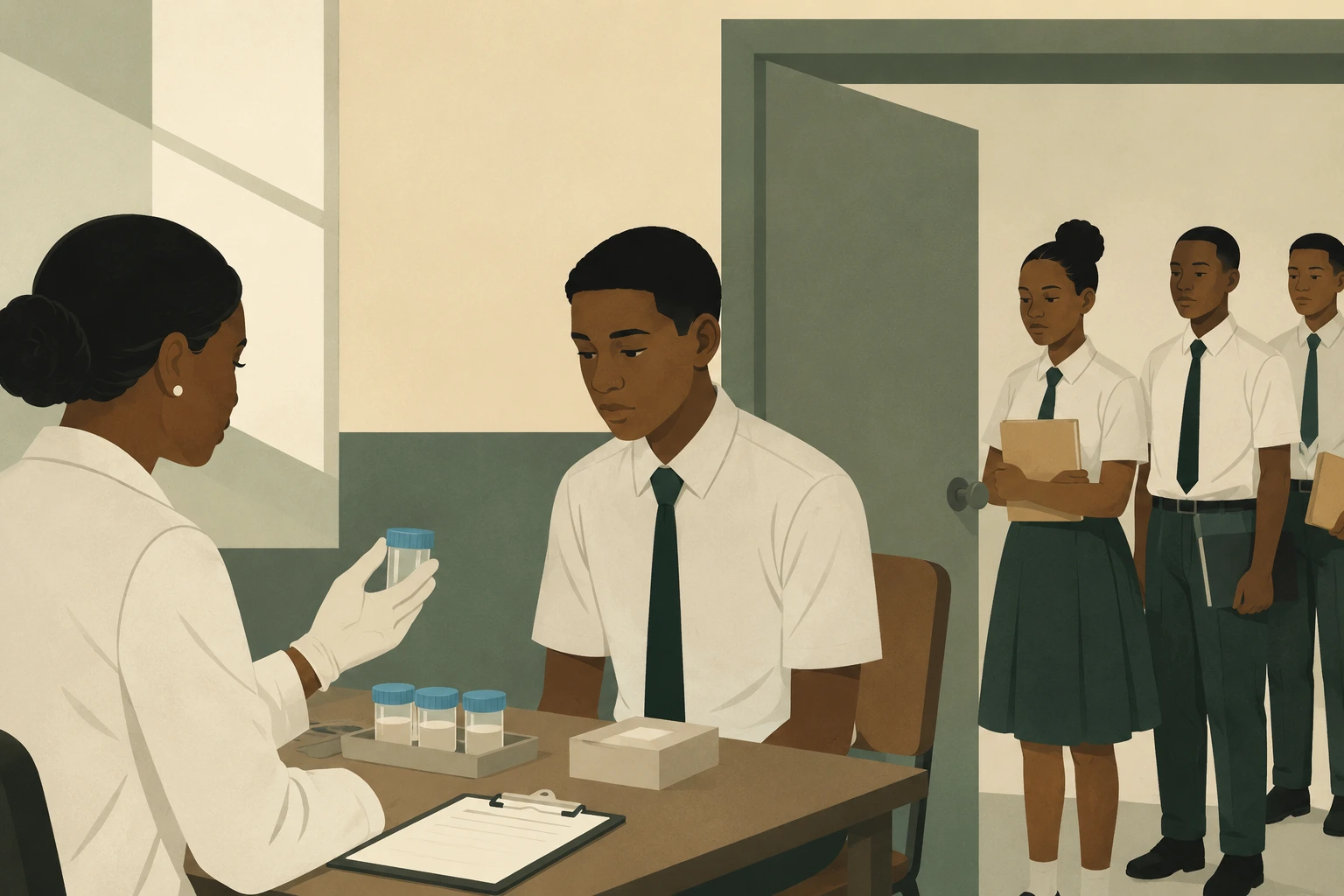
The Federal Government has introduced new strict guidelines aimed at tackling drug and substance abuse in secondary schools across Nigeria, including compulsory drug testing for students and possible suspension for repeat offenders after rehabilitation efforts.
Under the policy, all newly admitted secondary school students will be required to undergo mandatory drug integrity screening at the point of entry into their schools.
The measures are contained in the National Implementation Guidelines Against Drug and Substance Use in Schools in Nigeria for secondary schools, a framework designed to address rising cases of substance abuse and promote safer learning environments nationwide.
According to the document, the initiative is intended to “create a conducive environment for teaching and learning in the institutions by reducing the negative effect substance abuse has on the mental health and academic performance of students/learners.”
It further states that “all new students/learners shall be subjected to drug tests and other measures approved by the schools/learning centres at the point of entry,” with testing to be conducted in partnership with approved federal or state health facilities.
Beyond admission screening, schools are also mandated to carry out periodic and random drug tests for both new and continuing students at least once every academic session.
The guidelines add that “all students/learners shall undergo periodic drug tests as recommended by appropriate authorities,” while also prohibiting the use or possession of narcotic or controlled substances without official approval from school authorities.
Students who require prescription medication for medical reasons are expected to declare such drugs through their parents or guardians during admission.
The policy also outlines a three-stage intervention system for students who test positive for drug use.
It explains that the goal is to identify affected students early, provide support, and ensure a safe school environment.
Students who test positive for the first time will receive counselling and initial treatment determined by school authorities.
Those who test positive again will be referred for professional treatment and specialised care.
However, students who continue to test positive after a third round of intervention may face temporary suspension from the school environment.