

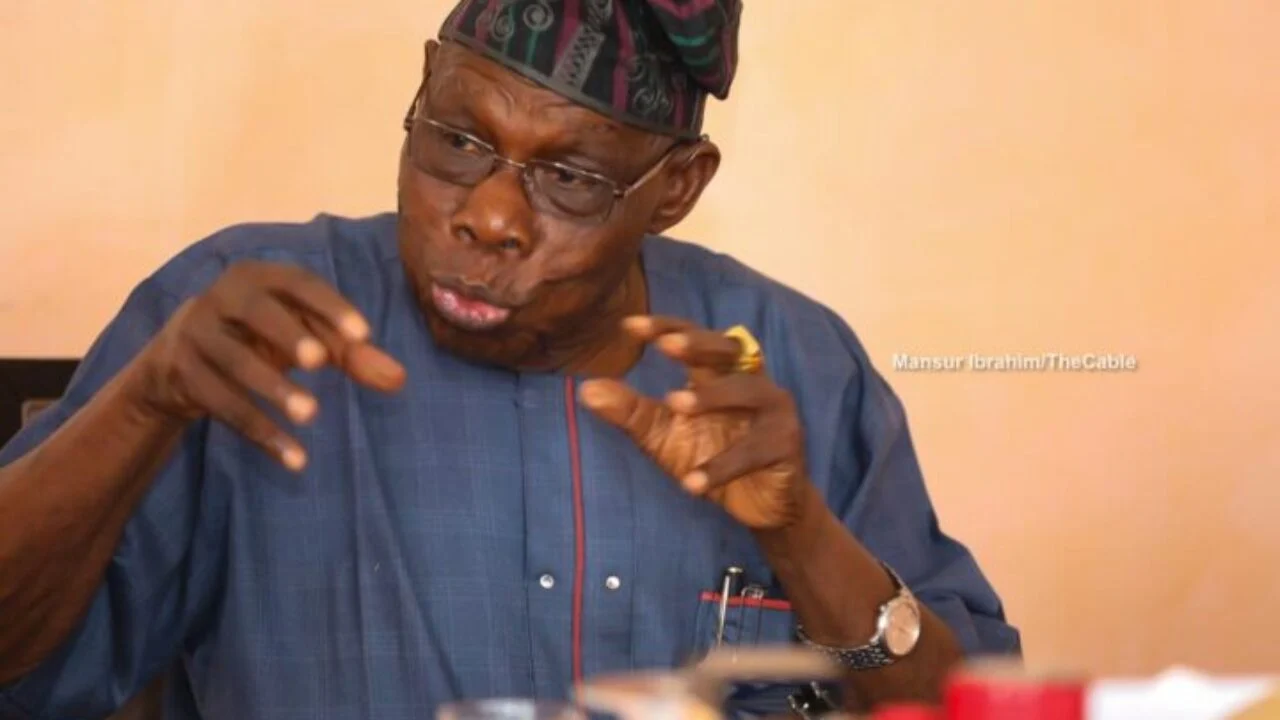
As the Nigerian National Petroleum Company Limited continues efforts to secure technical partners to manage the Port Harcourt, Warri, and Kaduna refineries, former President Olusegun Obasanjo has reiterated his long-held belief that the facilities are unlikely to ever function effectively.
Obasanjo made the remarks during a television interview aired on Saturday night on Sony Irabor Live, monitored by our correspondent.
He said public-private partnerships remain the most effective model for national development, citing the Nigeria Liquefied Natural Gas (NLNG) project as a successful example.
“One of the lessons that I learnt is that PPP (public-private partnership) works. Look, one project that has not been destroyed by the government in Nigeria is the NLNG, where the private sector has 51 per cent and the Nigerian government has 49 per cent,” he said.
He contrasted this with other state-run enterprises, including the railways, the national shipping line, and the Nigerian National Petroleum Company Limited, arguing that government control has often led to inefficiency.
“The NNPC has refineries, and I said to people that it will never work. And a man had the audacity to say, ‘Am I a chemical engineer?’” he added.
Obasanjo also revisited his attempts while in office to bring Shell into refinery operations, saying the oil giant repeatedly declined involvement.
“When I was there, I called Shell. I said, ‘Please, come and take 10 per cent equity and run the refinery for us.’ They said no. I said, ‘Okay, if you don’t want equity, come and run the refineries.’ They still said no,” he said.
He explained that when he later sought clarity from a senior Shell executive, he was given several reasons for the refusal, including low profitability in downstream operations, the small size of Nigeria’s refineries, poor maintenance, and concerns over corruption.
According to him, the executive noted that Shell’s major profits come from upstream operations, while downstream refining is largely service-driven and less profitable.
“He said our refineries are too small. He said refineries at that time were in the range of 250,000 to 300,000 barrels. He also said they are not well maintained, and there is too much corruption around them,” Obasanjo said.
The former president added that he once considered himself fortunate when Aliko Dangote expressed interest in investing about $750 million to acquire a controlling stake in two of the refineries, a development he viewed as a possible turning point in Nigeria’s refining challenges.