
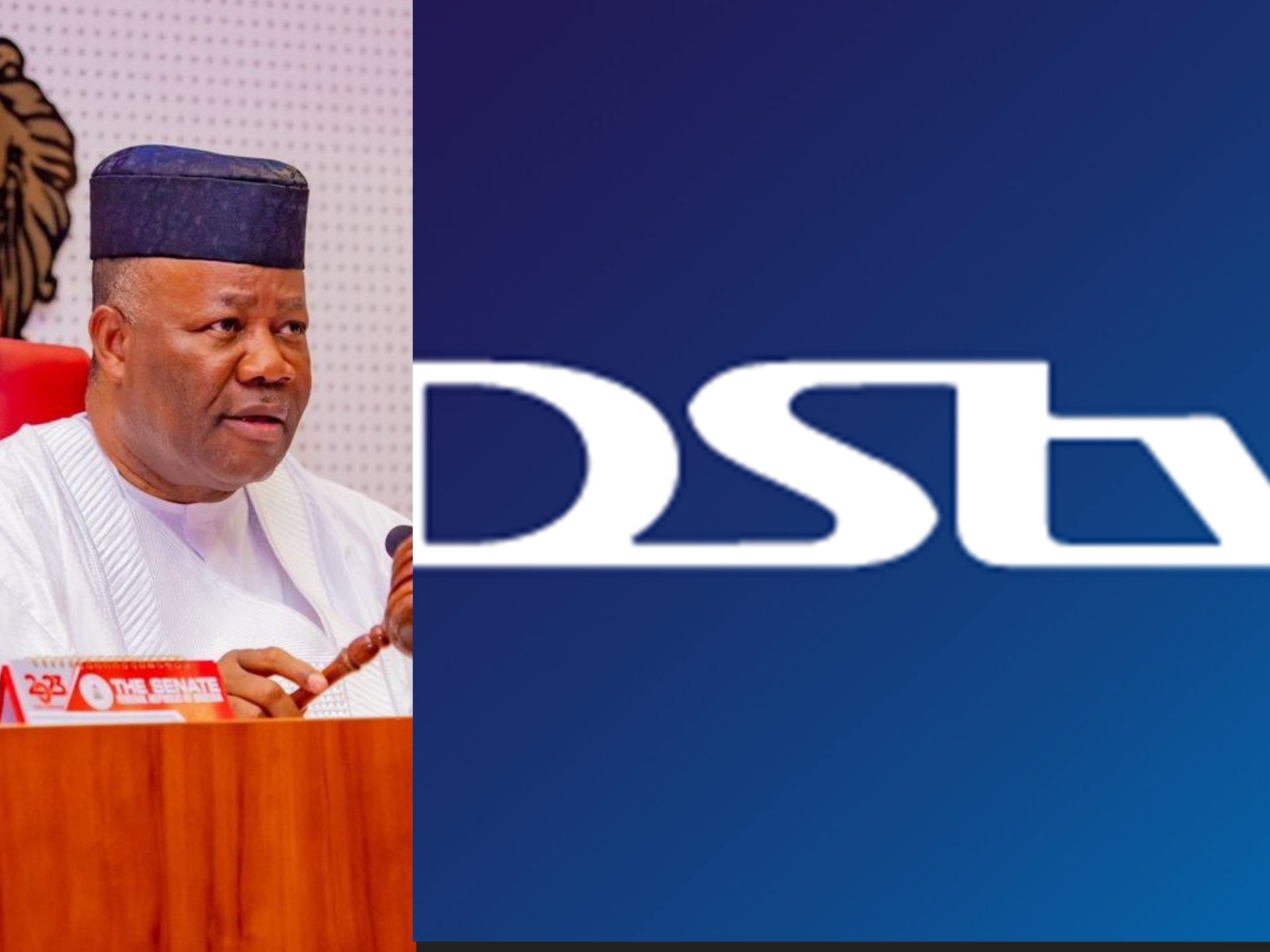
The Senate President, Godswill Akpabio, has raised concerns over the subscription model of DStv in Nigeria, questioning why users continue to lose paid subscription days even when they are not actively using the service.
Speaking during plenary on Wednesday, Akpabio compared the Nigerian billing system with what reportedly operates in South Africa, arguing that customers abroad are not penalized for periods of inactivity.
“DSTV in South Africa, if you travel for one month, two months, three months, your card will not run,” he said.
“Your money remains until you come and activate it. But in Nigeria, once you pay, if you travel for one week, two weeks, by the time you come back it has gone down,” he added.
He further argued that Nigerian subscribers are effectively being charged daily whether or not they access the service.
“So they are charging you on a daily basis even when it is not in use,” he stated.
Akpabio described the situation as unfair, particularly for families who travel and return to find their subscriptions already depleted. He also drew parallels with electricity billing, saying similar issues exist in the power sector.
“The same way we are paying for power that we are not using. You go to communities, their transformer has stopped working one year ago, but the people are still getting bills on a monthly basis,” he said.
He added that such practices should not be acceptable, insisting that service consumption should determine billing.
“The same way you’re not using DStv, you have travelled for holiday with your family, by the time you come back everything has been consumed, but it doesn’t happen in South Africa where they come from,” he said.
Akpabio then called for regulatory scrutiny, urging the Senate communications committee to summon the pay-TV operator for explanations.
“Which chairman is in charge of communication, please, we need to invite DSTV I just remembered it,” he said.